WILD CLAY
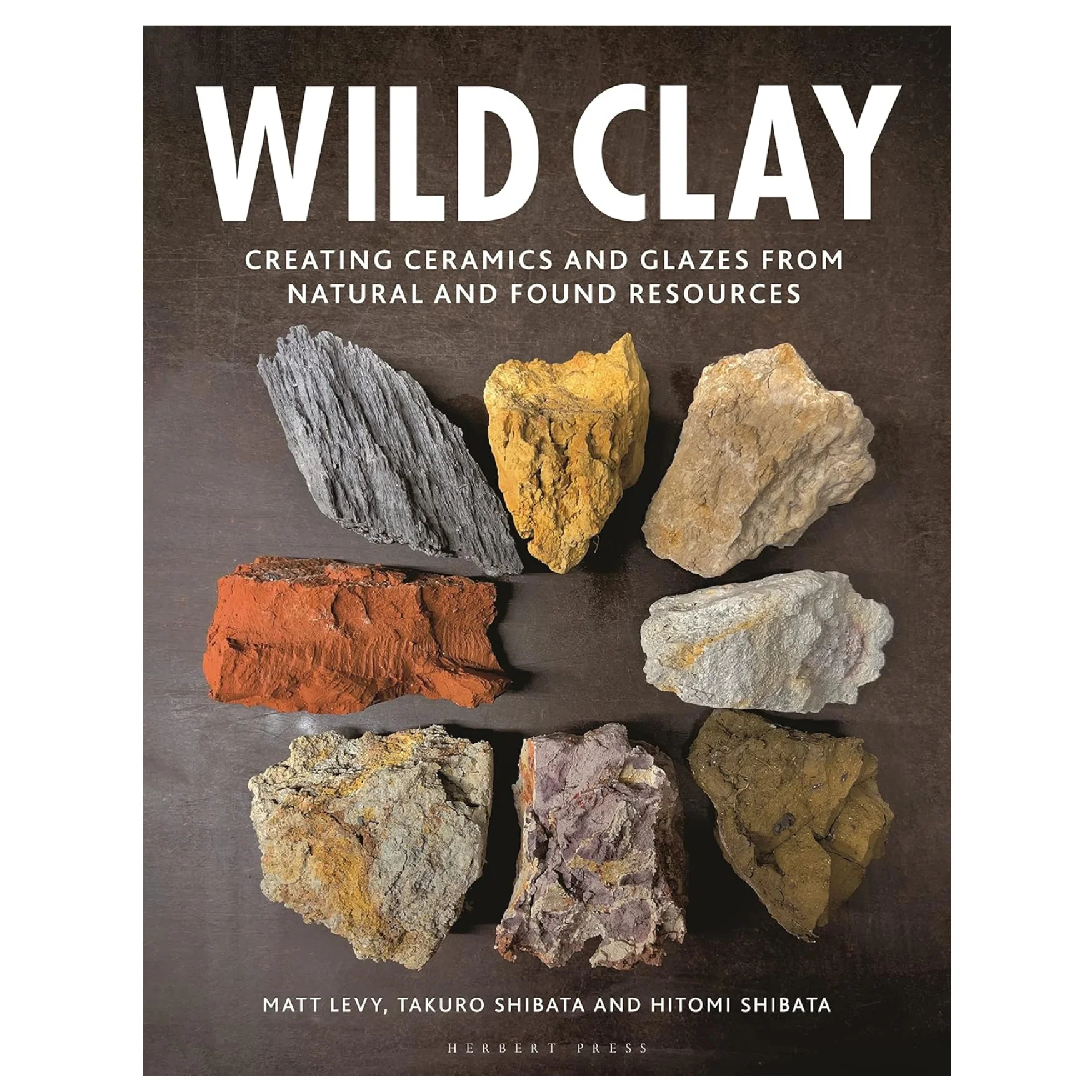
Potters around the world are taking to the local landscape to dig their own wild clay, discover its unique properties, and apply it to their craft. This guide is the ideal starting point for anyone – from novices, improvers and experts to educators and students – who wants to forge a closer bond between their art and their surroundings.
Testing and trial and error are key to finding a material's best use, so the authors' tips, drawn from long experience in the US and Japan (but which can be applied to clays anywhere) provide an enviable head-start on this rewarding journey. A clay might be best suited to sculpture and tile bodies, throwing clay bodies, handbuilding and slab bodies, or simply be applied as a glaze or slip. The specific properties of found materials can create a diverse range of effects and surfaces, or, even when not fired, can be adapted for use as colorful pastels or pigments.
Beautiful illustrations and helpful technical descriptions explain the formation of various clays; how to locate, collect and assess them; how to test their properties of shrinkage, water absorption, texture and plasticity; the best ways to test-fire them; and how to adapt a clay's characteristics by blending appropriate materials. From prospecting in the field to holding your finished product, there is helpful advice through every stage, and a gallery of work by international potters who have embraced the clays found around them.
WILD CLAY
Potters around the world are taking to the local landscape to dig their own wild clay, discover its unique properties, and apply it to their craft. This guide is the ideal starting point for anyone – from novices, improvers and experts to educators and students – who wants to forge a closer bond between their art and their surroundings.
Testing and trial and error are key to finding a material's best use, so the authors' tips, drawn from long experience in the US and Japan (but which can be applied to clays anywhere) provide an enviable head-start on this rewarding journey. A clay might be best suited to sculpture and tile bodies, throwing clay bodies, handbuilding and slab bodies, or simply be applied as a glaze or slip. The specific properties of found materials can create a diverse range of effects and surfaces, or, even when not fired, can be adapted for use as colorful pastels or pigments.
Beautiful illustrations and helpful technical descriptions explain the formation of various clays; how to locate, collect and assess them; how to test their properties of shrinkage, water absorption, texture and plasticity; the best ways to test-fire them; and how to adapt a clay's characteristics by blending appropriate materials. From prospecting in the field to holding your finished product, there is helpful advice through every stage, and a gallery of work by international potters who have embraced the clays found around them.
Product Information
Product Information
Shipping & Returns
Shipping & Returns
Description
Potters around the world are taking to the local landscape to dig their own wild clay, discover its unique properties, and apply it to their craft. This guide is the ideal starting point for anyone – from novices, improvers and experts to educators and students – who wants to forge a closer bond between their art and their surroundings.
Testing and trial and error are key to finding a material's best use, so the authors' tips, drawn from long experience in the US and Japan (but which can be applied to clays anywhere) provide an enviable head-start on this rewarding journey. A clay might be best suited to sculpture and tile bodies, throwing clay bodies, handbuilding and slab bodies, or simply be applied as a glaze or slip. The specific properties of found materials can create a diverse range of effects and surfaces, or, even when not fired, can be adapted for use as colorful pastels or pigments.
Beautiful illustrations and helpful technical descriptions explain the formation of various clays; how to locate, collect and assess them; how to test their properties of shrinkage, water absorption, texture and plasticity; the best ways to test-fire them; and how to adapt a clay's characteristics by blending appropriate materials. From prospecting in the field to holding your finished product, there is helpful advice through every stage, and a gallery of work by international potters who have embraced the clays found around them.